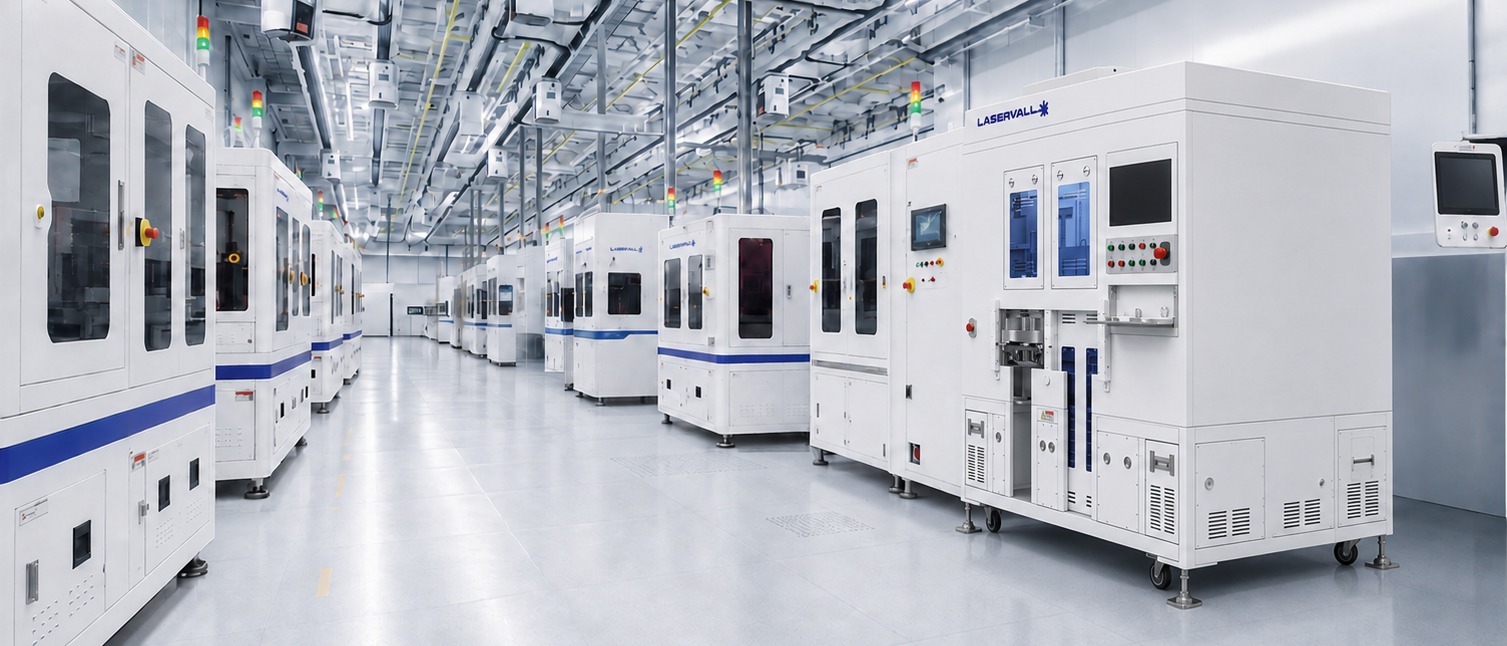
A successful prototype demonstrates that a product can work. Moving into production raises a different question: can the process deliver the same result repeatedly, at the required quality and volume?
For manufacturers of precision products, that transition involves decisions about equipment, process conditions, inspection and the people who will run the line. Questions left unresolved during development can become harder to address once production commitments are in place.
At Laservall, this challenge shapes how we think about manufacturing solutions. A promising demonstration is a starting point. The next step is to understand what must be validated before a process is introduced more widely.
Scaling pressure is rising across precision manufacturing
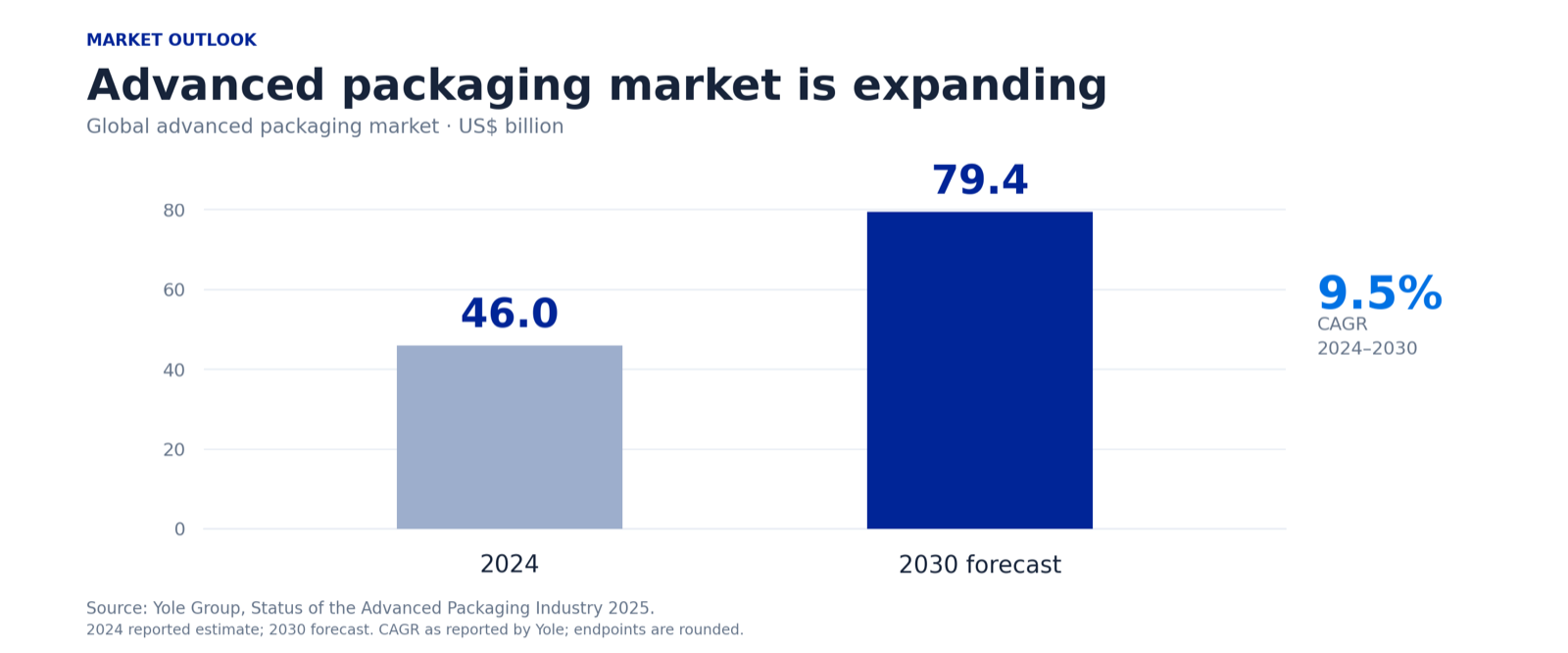
New processes are increasingly expected to reach volume quickly. Semiconductor packaging offers a clear example: Yole Group’s 2025 analysis puts the global advanced packaging market at approximately US$46 billion in 2024 and expects it to exceed US$79.4 billion by 2030, a compound annual growth rate of 9.5%.[1]
More products moving to volume, often with tighter tolerances and new designs, means more processes that must be proven before they are scaled. Each application still needs to be evaluated against its own product requirements, production conditions and quality expectations.
The practical question is what evidence a manufacturer needs before committing to the next stage of production.
Validate the process before expanding capacity
Pilot production gives manufacturers an opportunity to test assumptions before they become larger investments.
An initial trial may demonstrate that a process can produce an acceptable result. Further testing needs to establish whether that result can be repeated under the conditions intended for production, and where uncertainty remains.
Alongside repeatability, two practical questions are worth settling early:
- Which product characteristics define an acceptable result?
- How will results be inspected and recorded?
Shared cleanrooms and pilot lines can make this work more accessible. Semiconductors show where this is heading: in January 2025 the European Commission marked the launch of five semiconductor pilot lines, including one dedicated to advanced packaging, backed by €3.7 billion in combined EU and national funding. Process development and validation are among their intended functions.[2]
The value of a pilot environment comes from what it reveals: findings that help manufacturers decide what to change, what to test next and whether they are ready to expand. The framework at the end of this article sets out the key questions for each stage.
Test with the customer’s application in mind
Equipment evaluation becomes more useful when manufacturers and equipment partners agree on what they are trying to establish.
Testing on representative products helps connect equipment capabilities with the requirements of the intended application. Agreeing on acceptance criteria also gives both parties a clearer basis for discussing results and unresolved issues.
For an integrated manufacturing process, those discussions need to consider how its functions work together. Processing produces the result; inspection provides evidence of whether it meets requirements; automation influences how the sequence is repeated. Evaluating those relationships helps move the conversation from individual equipment features to production requirements.
Laservall brings together precision processing, automation and inspection capabilities in manufacturing solutions for mobility, consumer electronics, semiconductor and precision component production. For customers evaluating micro-laser jet soldering or other precision applications, the starting point is the process they need to establish and the evidence needed to assess it.
Make readiness part of the adoption decision
The first deployment of new equipment carries uncertainty. Joint testing can help clarify what is understood, what remains open and what needs attention before broader use.
Readiness also includes the people who will operate and support the process. Training requirements, operating instructions and responsibilities for responding to problems should be considered alongside equipment performance.
Collaboration between manufacturers, equipment partners and training institutions can help connect technical knowledge with practical production experience. This becomes particularly relevant when a new process introduces unfamiliar operating or inspection requirements.
Questions to guide the transition
The following framework provides a starting point for discussions between manufacturers and equipment partners.
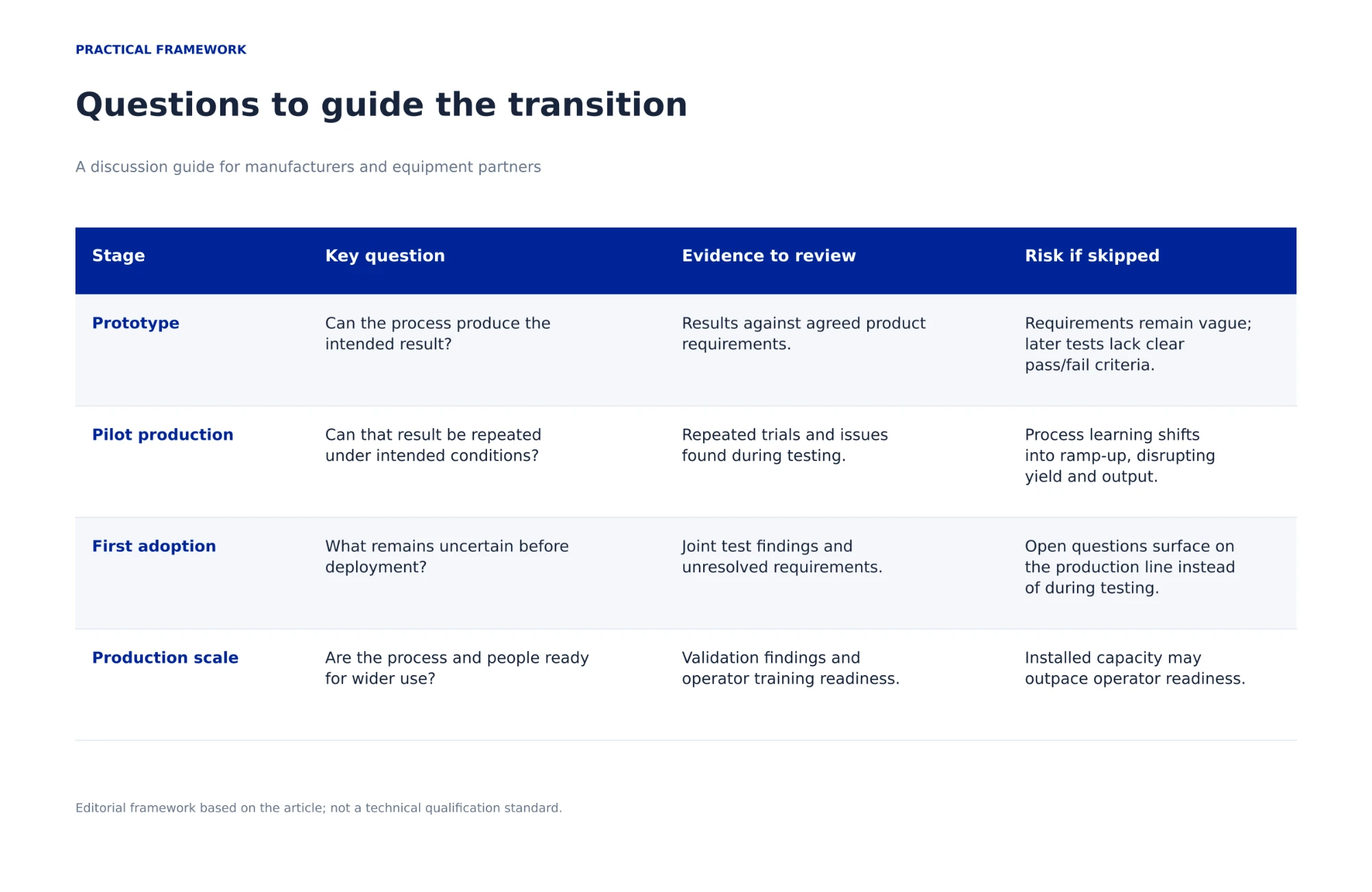
Making quality repeatable begins with defining what needs to be demonstrated at each stage. Early validation and close collaboration give manufacturers a clearer basis for deciding when to move forward.
Planning a new process or preparing to scale? Talk to Laservall about your application and production requirements.
[1] Yole Group, Status of the Advanced Packaging Industry 2025 (press release, September 2025). Authorised republication by the Edge AI and Vision Alliance.
[2] European Commission, Chips for Europe Initiative — Milestone event for first pilot lines, January 16, 2025. Read the announcement.